
Discovering the Allure of Vintage Books: A Love Letter to Old Pages, Forgotten Stories, and the Books That Find Us

Updated: Mar 10

There is a particular kind of magic in holding a book that has been loved before. The slight softness of the cover where someone else’s hands once rested. The faint smell of aged paper that rises when you open the first page. Maybe a name inscribed on the flyleaf in careful cursive, belonging to a person you will never meet, who once felt exactly what you are about to feel.
I have spent seven years working in the rare books trade, and in all that time, not a single day has dulled the thrill of encountering a truly special old book. If anything, the more I learnt, the deeper the allure became. So today I want to share that love with you and perhaps convince you that your next great read might be one that was printed long before you were born.
What Makes a Book ‘Vintage’?
There’s no hard rule, but in the book world, ‘vintage’ generally refers to books published between around 1900 and 1970 - old enough to carry history, but not so rare as to be untouchable. Antiquarian books, by contrast, tend to refer to anything pre-1900.
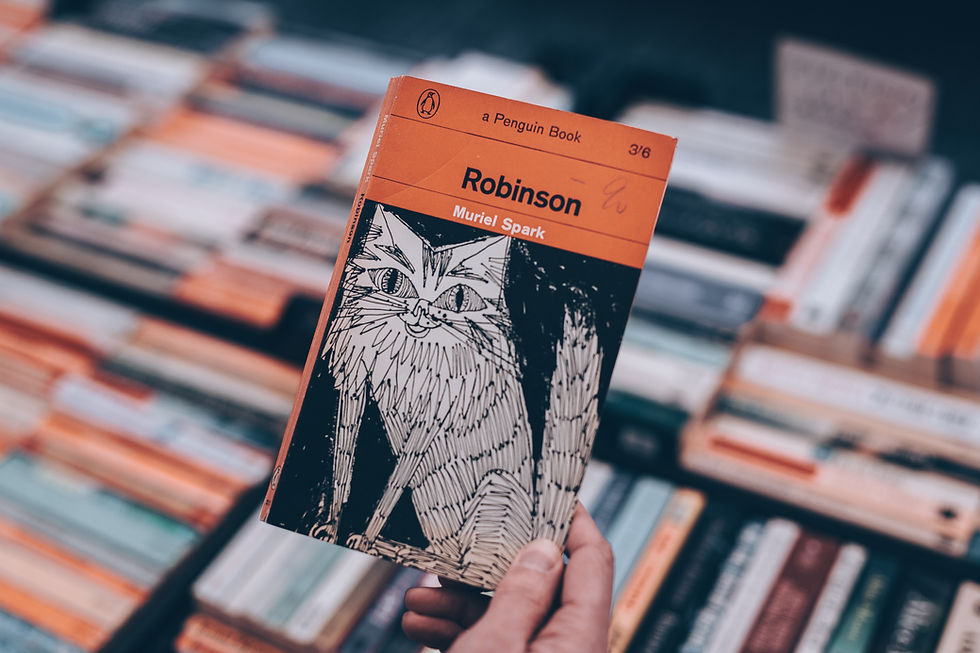
For our purposes, I’m talking about that beautiful middle ground: the mid-century paperbacks with their painted covers, the Edwardian novels with gilded spines, the 1940s Penguin oranges that once sold for sixpence.
These are books you can actually read, carry around, and fall in love with, without worrying about being precious.
The Allure: Why We’re Drawn to Old Books
Working in rare books taught me that people come to old books for all sorts of reasons, but they tend to stay for the same one: the feeling of connection. Connection to the past, to other readers, to stories told in a world very different from our own.
There’s also the pure, unapologetic beauty of them. Typography and cover design from earlier eras were genuinely artful, crafted by hand, printed with care, built to last. A well-preserved vintage book is a small work of art that also happens to contain a story.
And then there is the marginalia - the notes left in the margins by previous readers. I have found underlined passages, arguments scrawled in pencil, pressed flowers, theatre tickets, even a handwritten letter tucked between the pages. Every one of these is a small, unexpected gift from a stranger across time.
Where to Find Them
The good news is that vintage books are wonderfully accessible. Here are my favourite hunting grounds, from the most affordable to the more curated:
Charity shops and car boot sales: the most unpredictable and exciting finds come from here. Patience is everything, but so is the thrill of the hunt.
Independent bookshops: many have a dedicated second-hand section with curated vintage stock.
Abe Books and eBay: perfect if you’re looking for something specific. You can filter by decade, condition, and price.
Specialist rare book dealers: for first editions and more significant finds, a good dealer will authenticate condition and provenance. Having spent years on this side of things, I can tell you that a trusted dealer is worth their weight in gold, they’ll steer you toward pieces that will genuinely bring you joy.
What to Look For
You don’t need to be an expert to appreciate vintage books, but a few basics will help you choose wisely. Look at the condition of the binding - a tight, uncracked binding is a very good sign. While yellowed (tanned) pages are very common in the world of vintage books, if found in excessive amounts can seriously affect the legibility of the text and the integrity of the paper.
Aside from condition, edition can be equality important, especially if you are looking for first editions or truly valuable editions.
But honestly? Sometimes you pick up a book simply because it speaks to you. The cover, the title, the feel of it in your hands. Some of my most treasured finds were not valuable in any monetary sense but they were just exactly right.
A Final Word
Vintage books are not relics to be locked away. They are living things - meant to be read, re-read, passed on, and loved again. Every time you open one, you join a quiet, invisible chain of readers stretching back through decades.
So next time you pass a charity shop or stumble across a market stall, slow down. Pick one up. Smell the pages. Read the inscription (if there is one). You might just find that the best book you’ve ever read was printed sixty years ago and has been waiting patiently for you ever since.
—
Until next time, happy reading!
Ink & Leaf


Comments